Proven Ways to Validate Your Startup Idea Before You Build
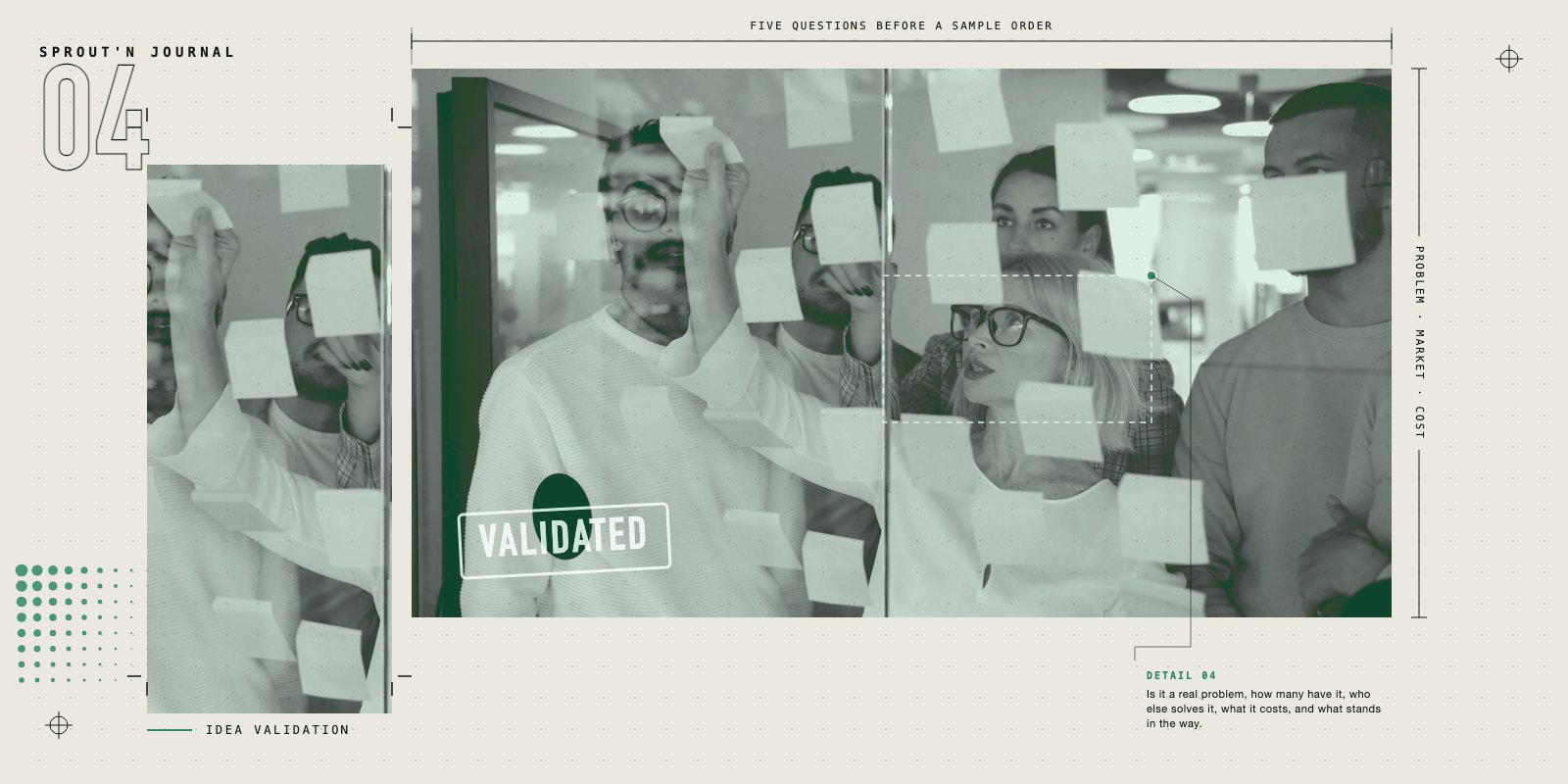
In short: validating a startup idea means answering five questions before you build: whether it solves a real problem, how many people have that problem, who is already solving it and how you differ, what it will cost against what people will pay, and what market constraints stand in the way.
There is a lot of unnecessary risk you can take on when you are eager to start your own business. The thrill of receiving a sample or your first order can overcome your rational senses. After all, social media is screaming at you to just do the damn thing. The good news is you can still do the thing, as long as you are aware of the risk you are about to open yourself up to. Validating your business idea helps you understand what level of risk you are taking on, whether there are indicators of success present, and what kind of return you could get on your investment.
In this piece we cover five questions you should be answering before building your business.
Are you solving a problem?
There is more than one way for a business idea to be successful. Building a reputable brand is one way of acquiring revenue. But the odds are rarely in your favour when you are trying to enter a market that is already being satisfied by other companies. Finding a startup idea that solves a problem people are currently experiencing is paramount to increasing your chances of success. It drives purchase intent with a far lower marketing budget than, say, a lifestyle brand, which most of the time requires intensive marketing spend.
Solving a problem means you have the potential to tap into a market that wants a solution and does not quite have one yet. It is also a lot easier to convince someone to buy your product if they are already feeling some sort of pain or discomfort. You also have to consider how big the problem is. That dictates two things: how easily people will spend money on your idea and how much they will be willing to spend. If the problem is big enough, the horse is already at the water, ready to drink.
To find out whether it is a real problem, there are a few methods of research you can try. One, scour forums and social media platforms, and if possible observe people in their day to day to see if they are having the same troubles. Two, look up whether the problem is being searched, which leads us to the next question.
How many people have this problem?
The next crucial question is whether more than a handful of people are experiencing the problem. With many business ideas, especially those with lower price points and no recurring revenue, one or two hundred people will not be enough to make the idea succeed. Getting a clear picture of your target market and its size is an important step in knowing whether the idea is set up for success from the outset.
Is anyone currently solving this problem, and why are you different?
You cannot just be a copycat brand and offering. So what about your idea is different? Can you provide a better customer experience, a better feature or better pricing, or are you building the idea on unique branding and marketing? Understanding who your competitors are and where their flaws lie gives you an opportunity to exploit those gaps from the start. Equally important is learning what people like about your competition, so you can meet those standards or even exceed them.
Competition not only lets you benchmark your offering in terms of features and benefits, it also gives you the chance to gauge your price point. Knowing the range of prices top sellers charge, and how your product stacks up against theirs, supports you in the next step: financial viability.
How much will it cost, and how much are people willing to pay?
You can have the best product or software on the market, but if people are not willing to pay what it is worth you may as well be donating your money to a better cause. That sounds harsh, but it is true all the same. There are multiple ways to consider whether an idea is financially viable. From a product creation perspective, the bigger picture can be discouraging: sample costs, manufacturing costs, packaging costs, freight costs, website creation, marketing and advertising, and shipping costs. The list goes on if you want to account for a percentage of returns per manufactured order. It becomes overwhelming, and it can feel like the odds are stacked against you. Breathe.
We suggest you look at financial viability in a more tailored way. Start with your landed cost per unit (manufacturing plus freight, and avoid extra branded packaging on your first few orders) and your shipping cost to the customer, which may include polybags or boxes and postal fees. Once you have this unit cost, consider what your competitors are charging (does it include shipping?) and what people are willing to pay. This gives you your profit before your advertising cost of sales.
These calculations show you what wiggle room you have for marketing costs while breaking even and managing cash flow. You can then estimate how long your capital will last and when you would need to add another investment.
The same calculations apply to a software or service idea. How much will it cost to design, create and maintain the idea compared with how much potential users are willing to spend? In the software scenario, you are looking at how long it takes to break even while maintaining marketing efforts.
What are the market constraints?
Lastly, are there any barriers to entry, such as legal regulations or required testing and certifications? Take baby products or consumables, for example: you are required to have the proper testing performed and product certifications in place before you can sell a baby product. These tests and certifications often happen at the supplier level, but some suppliers pass on the cost, cutting margins and reducing financial viability from day one. If you are looking to do something outside the box with customizations, this is something to research properly.
Why it is worth the time
Taking the time to explore these five questions can save you a lot of money and risk, and it can also strengthen your belief in your idea. It gives you a clearer picture of the mountain you are about to climb. Instead of gambling on hope, you will be educated and informed, bringing your idea to another level to deliver a better result.
Validation channels your excitement and your actions. It turns the thrill of a sample order into the thrill of real progress and traction. It is the difference between launching blind and launching with purpose.
So before you dive into building, pause. Ask the hard questions, do the uncomfortable research, and let your findings shape your next steps. If your idea stands strong after this process, you will not just be starting a business. You will be building a foundation that can actually last. If you want help scoring an idea against these questions, that is exactly what Seed was built for.